Competition Nerves: A Personal Experience from the CrossFit Games 2012
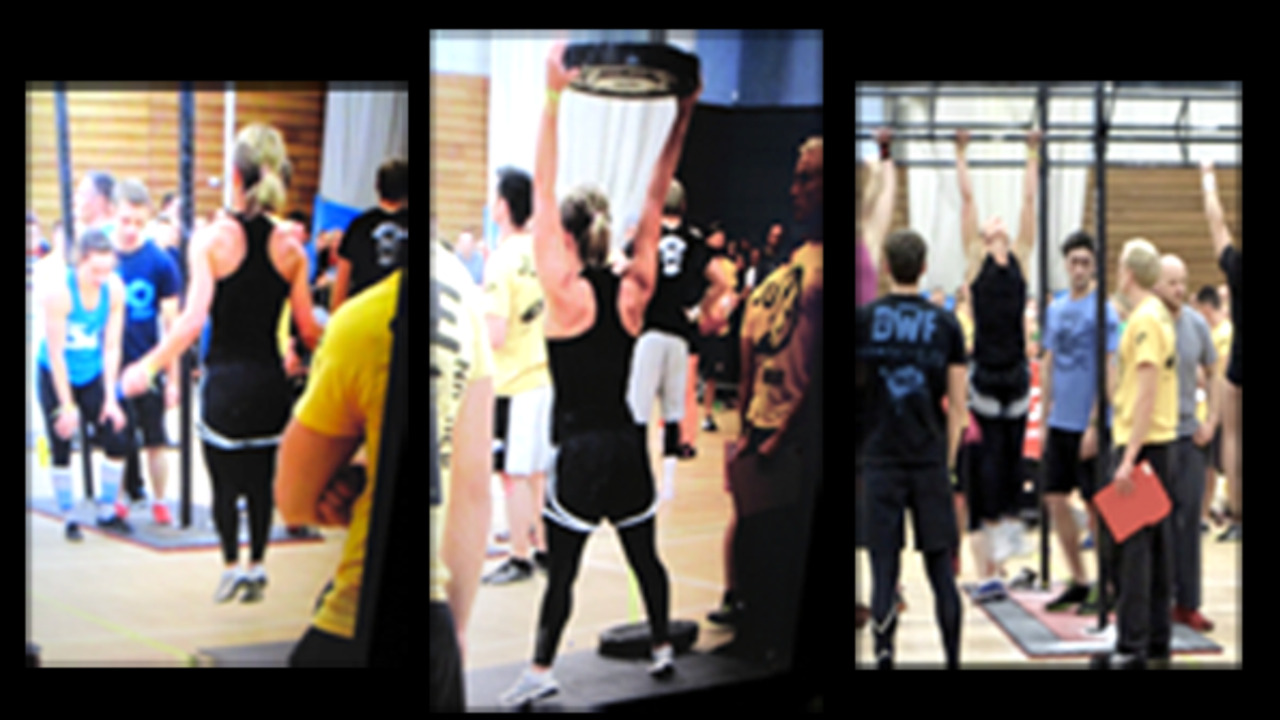
Advanced Yoga Sports Coach™ Annelize Ferreira shares her personal experience of competition nerves.
Ten months ago, I would never have thought that I would be moving a 15 kg barbell plate 84 times from ground to overhead, performing 49 unassisted pull-ups and racing my way through 210 double-unders (all against the clock) in front of a 2,000-strong crowd.
I was competing as part of a six-member team at Europe's largest CrossFit competition: Divided We Fall CrossFit Games 2012.
As a recreational CrossFit fanatic, this was the ultimate test of my physical progress and an opportunity to compare my fitness levels against approximately 236 other women attending from across the UK.
Weeks of intense training and a few injury scares were finally behind me, and I was faced with the biggest challenge of all: competition NERVES!
Instinctively, I put into practice the skills I had gained from my Yoga Sports Science® training. I took myself off to a quiet corner, settled into a diaphragmatic breathing pattern and repeated my positive affirmation.
I was able to visualise my goal with clarity.
In the midst of the crowd, heat and thumping music of the arena, I found myself feeling connected to my body and the task ahead.
The feeling of nervousness took on a different quality. The nerves were no longer crippling my senses or distorting my body awareness.
I was ready to show what I could do.
And I succeeded!
Practical Tools for Competition Nerves
This experience made me realise how valuable sport-specific yoga techniques could be in preparing athletes for the heightened autonomic fight-or-flight response they may experience on competition day.
Competition day brings many challenges. It takes athletes out of their familiar training environment and places them in situations where they are unable to control external factors.
The unknown may bring fear or anxiety, which can heighten the sympathetic nervous system response and cause a range of unpleasant physical sensations.
The athlete may find it more difficult to respond dynamically to unexpected challenges, and self-doubt may creep in.
We've all heard even the most elite athletes say that they've trained for hours, but on competition day, everything fell to pieces.
As a competitive swimmer during my high school years, I remember clocking my best breaststroke times in training with effortless technique.
Come competition day, however, and I would swim a completely different race, recording some of the worst times in my age group.
My body and mind were not always able to respond to the challenges of competition day, and I didn't have the practical tools to manage my body's autonomic responses.
Equilibrium and the Autonomic Nervous System
In my quiet corner, preparing myself for my CrossFit workout, I realised just how powerful sport-specific yoga techniques could be in helping me manage my response to competition nerves.
The techniques allowed me to become more aware of my body and mind, rather than feeling overwhelmed by my nervous system's responses.
I experienced first-hand how, as Yoga Sports Coaches™, we can support our athletes on the one day that really counts: competition day!
We have a range of mind-body tools available to us, including performance breathing techniques, visualisation, progressive relaxation exercises and positive affirmations.
These approaches offer practical ways to help athletes prepare for the psychological demands of competition.
My Message to Yoga Sports Coaches™
Consider why you started practising yoga and why you continue.
For most of us, a regular practice provides an opportunity to connect with ourselves through movement and breath.
We keep coming back to our mats to experience how the relationship between mind and body can create a feeling of physical and mental strength and stability.
Allow your athletes to experience this, too.
As a Yoga Sports Coach™, implement sport-specific mind-body techniques, not just structural techniques, during your coaching sessions.
These approaches may give your athletes that extra 1% advantage over their competitors and could make all the difference on race day!
Recommended Reading and Online Resources
-
Douillard, J. (1995). Body, Mind and Sport: The Mind-Body Guide to Lifelong Health, Fitness, and Your Personal Best. Three Rivers Press.
-
Rama, S., Ballentine, R. and Hymes, A. (1998). Science of Breath: A Practical Guide. Himalayan Institute Press.
-
Greenfield, P. M. (2009). Unravelling: Letting Go, Getting Well. True Alignment.
-
Sabatini, S. (2007). Breath: The Essence of Yoga. A Guide to Inner Stillness. Pinter & Martin.
-
Merck Manual. Overview of the Autonomic Nervous System. Merck Manual website.
About the Author
Annelize Ferreira is a musculoskeletal and sports physiotherapist working in private practice in Harrogate, North Yorkshire.
She is a Yoga Sports Coach™ and has developed a keen interest in combining the principles of sport-specific yoga with her clinical practice to improve form and function across different areas of life.
She helps people with a variety of conditions, including digestive issues associated with diaphragmatic and skeletal alignment, musculoskeletal conditions, chronic pain and stress-related somatic pain.
Her primary expertise is in the treatment and rehabilitation of sports injuries.
