Yoga Sports Science® Helped Me Quit My Job and Become a Self-Employed Yoga Sports Coach™
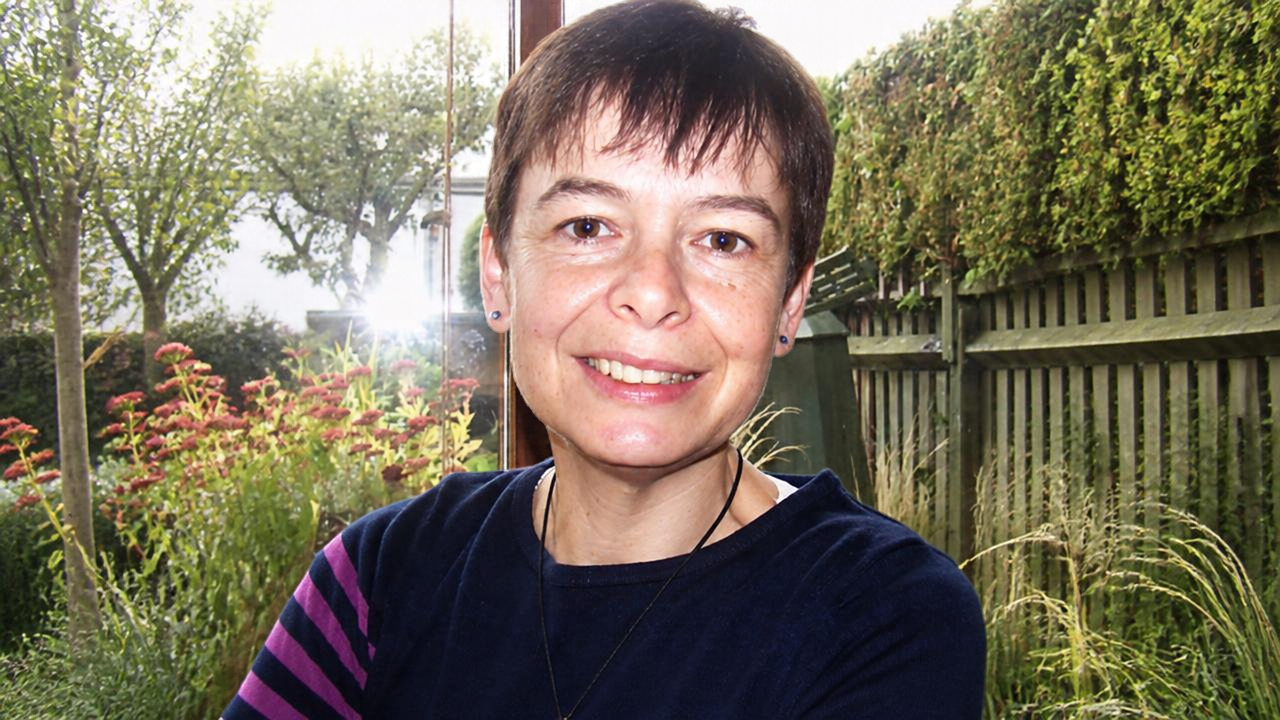
Originally published 2015· Written by Yoga Sports Coach™ Lesley Durke
In April 2014, I finally took the enormous step of giving up my part-time job, with the security of a known, regular income, to become a self-employed yoga teacher and Yoga Sports Coach™.
This was not a random or spontaneous decision, but one that had been in the planning for several years. Yet it still took a lot of courage and self-belief to get to the stage of handing in my notice.
I had been a gymnast for over 20 years, starting at the age of three, and had spent a lifetime trying many forms of exercise and sport, including dance, athletics, climbing, fitness classes and yoga.
I had also had a career as a specialist pharmacist in orthopaedic and trauma medicine, but working for myself in a field that combined wellbeing with exercise and physiology was where my heart lay.
My Main Turning Point
I passed my yoga teaching qualification in September 2012 and set up my first class in the same month.
In September 2013, I qualified as a Yoga Sports Coach™ with Yoga Sports Science® (YSS), having completed a case study report on a veteran middle-distance runner.
Now, as 2015 draws to a close, I run four yoga classes as well as teaching yoga privately. My case study athlete is now a client, having continued to work with me to improve his posture and functional mobility since the study period ended.
The path to this point has not been easy and has taken a lot of effort and sacrifice along the way. But it is so rewarding to be working for myself and doing something that I love.
Life is now a lot more flexible, which, as I am also a carer, has made things so much easier. I am also healthier and happier.
The main turning point for me was undertaking the YSS Yoga Sports Coaching course.
My yoga teaching qualification gave me a good foundation, but I soon found the style I had qualified in very limiting. The YSS course added so much to my knowledge and understanding of biomechanics and yoga.
Trying the YSS yoga interventions on myself was enlightening. I began to understand the impact that over 20 years of gymnastics had had on my body and also learnt ways to address some of those issues and bring greater balance back to my body.
I also took these yoga interventions into my yoga classes, observing my students' responses and movements and sharing those observations with my peers on the course.
My lesson planning and classes were transformed. My students could develop their practice in a way that balanced strength with flexibility. They also enjoyed the new style of lessons that I continued to evolve and became more aware of their own progress.
Marketing Myself
The commitment to leaving my job meant that I had to have a plan in place for developing my business.
After qualifying with YSS, the first part of the plan was to set up my website, which covered both general yoga classes and Yoga Sports Coaching. The website worked really well and became one of my main sources of enquiries.
Marketing always needs to involve various ways of reaching potential clients. Leafleting was also important for me, as was advertising in local magazines and for free on internet listing sites.
I even wrote an article on 'Yoga for Athletes' for a leading yoga magazine!
Hayley Winter also gave me sound advice, saying that I would know when the time was right to move on and, if I was courageous enough to make that move, things would start to happen.
It sounds incredible, but that is exactly what happened!
No sooner had I left my job than all sorts of unexpected and varied enquiries came out of the blue, some of which came to fruition and broadened the scope of my work.
Working With Talented Athletes
I was very lucky to have a case study athlete who was so impressed with the effect of YSS yoga that he continued to have lessons with me.
Since February 2014, I have also had the good fortune to work weekly with a young, talented javelin thrower who is among the top juniors in the UK.
He trains with some of the UK's leading javelin coaches, including the National Coach at Loughborough. It was good to know that these coaches had encouraged him to practise yoga to work on his balance, mobility and flexibility, and that yoga was officially included in his training programme.
This teenager is a very committed athlete who is willing to work hard and try anything that may help him improve. This, in turn, is very motivating for me and has helped me develop as a Yoga Sports Coach™.
Personally, I have never thrown a javelin in my life, so learning about the technique and movements involved has underpinned all the work that I have developed so far for this athlete.
To add interest to the lessons, I developed some yoga and javelin-specific interventions using a broom handle as a javelin replacement. I have a tendency to say broomstick, but it sounds like something from Harry Potter!
A real benefit for the athlete is that he can take some of these interventions to training and practise them with his real javelin.
The Biggest Lessons I Have Learnt
I think some of the biggest lessons I have learnt from working with this athlete are:
1. Working with athletes is very different from teaching a general yoga class.
For my classes, I spend a long time on my lesson plans, trying to add variety so that class members can develop their postures, strength and mobility while remaining stimulated.
Athletes, however, will generally have set training plans with exercises and movements that they repeat over and over again to build muscle memory and hone their technique.
My athlete therefore prefers to work on a set programme during lessons, with gradual progression over time.
2. Give the athlete something they can work with over time.
Developing a remote working plan that the athlete can focus on in his own time over several weeks, or even months, is far more effective than giving new homework after every session.
Taking photographs at the beginning, during and at the end of the period gives the athlete a way to see their progress, which can also provide motivation to keep practising.
3. Less is more!
When working with such a willing student, it is easy to get carried away and try to cover everything in one lesson.
Looking at the overwhelmed face of my athlete after one session, I immediately realised that the practice had been too intense and too broad in its content.
Since then, the content of my lessons has been pared down so that the athlete can really focus on the work he is doing.
The Best Reward
It is important to realise and accept that completing the YSS Yoga Sports Coach™ qualification is only the beginning.
Learning to understand and interpret an athlete's physiology and movement characteristics, and how to respond to them, is a continuous learning process. It is a personal evolution.
I am aware that since completing the course, I have continued to grow as a person and as a Yoga Sports Coach™.
There have been many 'light bulb' moments when things have suddenly become much clearer and my understanding, and the application of that understanding, has progressed.
Perhaps the best reward, apart from seeing this young athlete's progress, is knowing that he has been so inspired by his sport-specific yoga that, despite all the sports he enjoys, he chose to teach yoga techniques for his teaching assignment as part of his school examinations in PE!
Above all, for me, it is important to be professional in my approach to my business and my work at all times, to have belief in myself and in what I do, and to aim to enthuse my clients with my own passion for yoga.
But at the end of the day, the most important thing of all is to enjoy my work and have fun!
Interested in Working With Athletes?
If you're a yoga teacher looking to develop your skills and explore opportunities within sport, our Yoga for Athletes 40-Hour Online Course brings together yoga, movement science and practical approaches to working with athletes.
Explore the Yoga for Athletes 40-Hour Online Course
